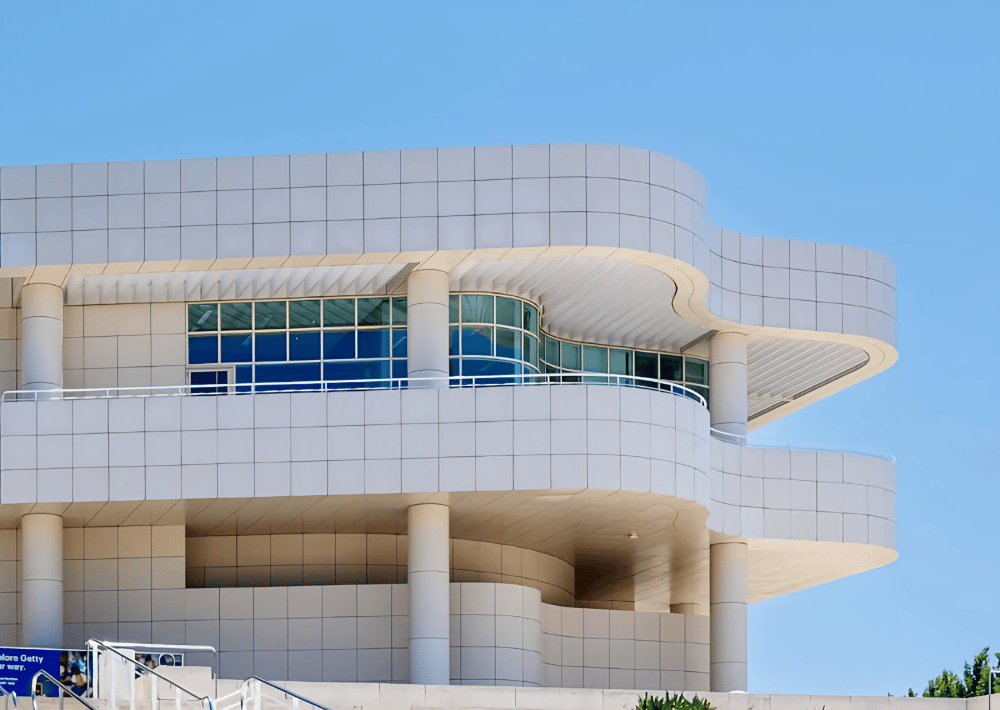
The J. Paul Getty Trust announced this year that its hilltop museum will close to the public on March 15, 2027, for the most significant renovation since the Getty Center opened in 1997. The project carries a price tag of $600 million to $800 million, replaces the iconic tram, rebuilds the Welcome Hall, and targets a reopening in spring 2028, timed to the Los Angeles Olympics. That is the version of the story that will run in every outlet covering Los Angeles culture between now and next spring.
Here is the version that matters if you already live behind one of Bel Air's two gates: you have been getting a preview of that closure, on and off, since Caltrans started tearing into the 405 through the Sepulveda Pass back in the early spring. The museum hasn't gone dark yet. The ramp that gets you there already has, more nights than most visitors realize.
The Renovation, Read Straight
The Getty's own announcement lays out the scope plainly. The tram, the one that has carried visitors up the hill since the campus opened, is being replaced with a new system designed by the Austrian manufacturer Doppelmayr. The Welcome Hall at the top gets a full rebuild by Why Architecture, the firm behind the Metropolitan Museum's Michael C. Rockefeller Wing renovation, with an expanded bookstore and new cafe. Work on the HVAC system has already started, which is why a couple of the exhibition pavilions have had rolling gallery closures this year, ahead of the bigger shutdown.
During the closure, the Getty Villa in Pacific Palisades stays open and takes on some of the load, including a new gallery of paintings pulled from the Getty Center's own collection so visitors don't lose access to those works entirely. Closer to home, Getty is opening a new permanent programming space directly across Sepulveda Boulevard from the main campus, in a building currently under renovation. That venue hosts events through the closure and stays active as a dedicated program space once the hilltop reopens. It is the one piece of this plan that adds something to the neighborhood rather than just pausing it.
A Ramp That Was Already Unreliable
The freeway work is a separate project, but it has been quietly setting the terms for what "access to the Getty" has actually meant in Bel Air for most of this year. Caltrans is running the $143.7 million I-405 Pavement Rehabilitation Project between Van Nuys and Westwood, and the Getty Center Drive ramp sits right in the middle of that corridor.
The pattern started showing up on Caltrans's schedule back in February, when the agency flagged an extended weekend closure for March 6 through 9 as part of a series of roughly 25 such weekend closures spaced about every two weeks. By mid-March, the work had escalated to full weeknight closures, March 16 through 20, followed immediately by another weekend closure March 20 through 23, both of which took the Getty Center Drive off- and on-ramps out of service. That cadence has held through the year. As of this week, Caltrans has nightly closures running Monday through Friday, September 21 through 25, again pulling the Getty Center Drive ramp along with connectors at Sepulveda Boulevard and Ventura Boulevard.
| Closure window | What went down | Duration |
|---|---|---|
| Mar 6-9, 2026 | Weekend lane reduction, Sepulveda Pass | Fri 10pm to Mon 5am |
| Mar 16-23, 2026 | Getty Center Dr ramps (both directions), extended weekend | Weeknights plus full weekend |
| Sep 14-19, 2026 | Getty Center Dr off-ramp, multiple 405 lanes | Nightly, 9pm to 6am |
| Sep 21-25, 2026 | Getty Center Dr ramp, Sepulveda & Ventura connectors | Nightly, 9pm to 6am |
Seven months of that cadence means the ramp has already been unreliable often enough that most people who live above it have stopped treating it as a given. By the time the museum's own closure begins next March, the neighborhood will have had a year of practice routing around a hilltop that periodically cuts itself off from the freeway below. The Getty's closure is the bigger headline. The freeway work is the reason it won't feel like as much of a shock when it arrives.
What's Worth the Drive Before the Real Closure
The current calendar at the Getty is unusually full for a museum six months out from going dark. "Odilon Redon: Otherworldly Visions," drawn largely from the museum's own collection of the French Symbolist's charcoal drawings, lithographs, and pastels, closes October 18, which puts it on the short list of shows worth catching before autumn ends. The exhibition includes "The Battle of the Bones," a recent acquisition, alongside the pastel portrait "Baronne de Domecy."
Right behind it, the Getty opened Joshua Reynolds's "Portrait of Mai" on September 15, just over a week ago, which tells you the institution isn't treating this stretch as a wind-down. The "Off the 405" concert series has run select Saturday evenings since late May, and a "Garden Concert for Kids" series started in August. All of it runs on the museum's normal calendar through spring 2027, meaning the next six months are effectively the last full season on the hill before the closure begins.
What Doesn't Move
Not everything up here answers to a construction schedule. The Stone Canyon Reservoir itself stays fenced, as it has for decades, but a short public overlook on Mulholland Drive, maintained by the Mountains Recreation and Conservation Authority, gives hikers a clear view down onto the water without ever crossing that line. Longtime residents in the hills above it describe a separate trail that runs past a small Buddhist stone labyrinth, built decades ago and still tended today, tucked into the hillside above the homes on that side of the canyon.
For an actual walk rather than a lookout point, the neighborhood's real menu of trailheads is short and specific: Westridge-Canyonback Wilderness Park, the Mandeville Canyon Fire Road, and the Caballero Canyon Trail all sit within reach, along with the Getty View Trailhead, which happens to double as a way to approach the museum on foot on the nights the ramp below it isn't cooperating.
Down at street level, the Restaurant at Hotel Bel-Air on Stone Canyon Road keeps the same rhythm it always has, breakfast through dinner, seven days a week, regardless of what's happening on the freeway or the hill above it. It is one of the few fixed points in a neighborhood where almost everything else, this year, has come with a closure notice attached.
The Real Timeline
Strip away the renovation renderings and the ribbon-cutting language, and the actual sequence looks like this: a freeway rehab project that started disrupting Getty Center Drive access back in February, a museum that keeps running a full exhibition and concert calendar anyway through this fall and winter, and a formal closure that doesn't begin for another six months. The announcement made national art press because it's a $600 million story about a landmark building. For the people who live closest to it, the more useful fact is smaller: the ramp has already taught you how to leave the hill on a bad night. March 2027 just makes that the rule instead of the exception, for a while.
If you're weighing a purchase or a sale in Bel Air, Brentwood, or anywhere else across the Getty's shadow, The Di Prizito Group tracks these kinds of details as closely as the comps, because in this part of Los Angeles, access and timing are often the difference between a listing that sits and one that moves. Reach out when you're ready to talk through what's actually happening on the ground.