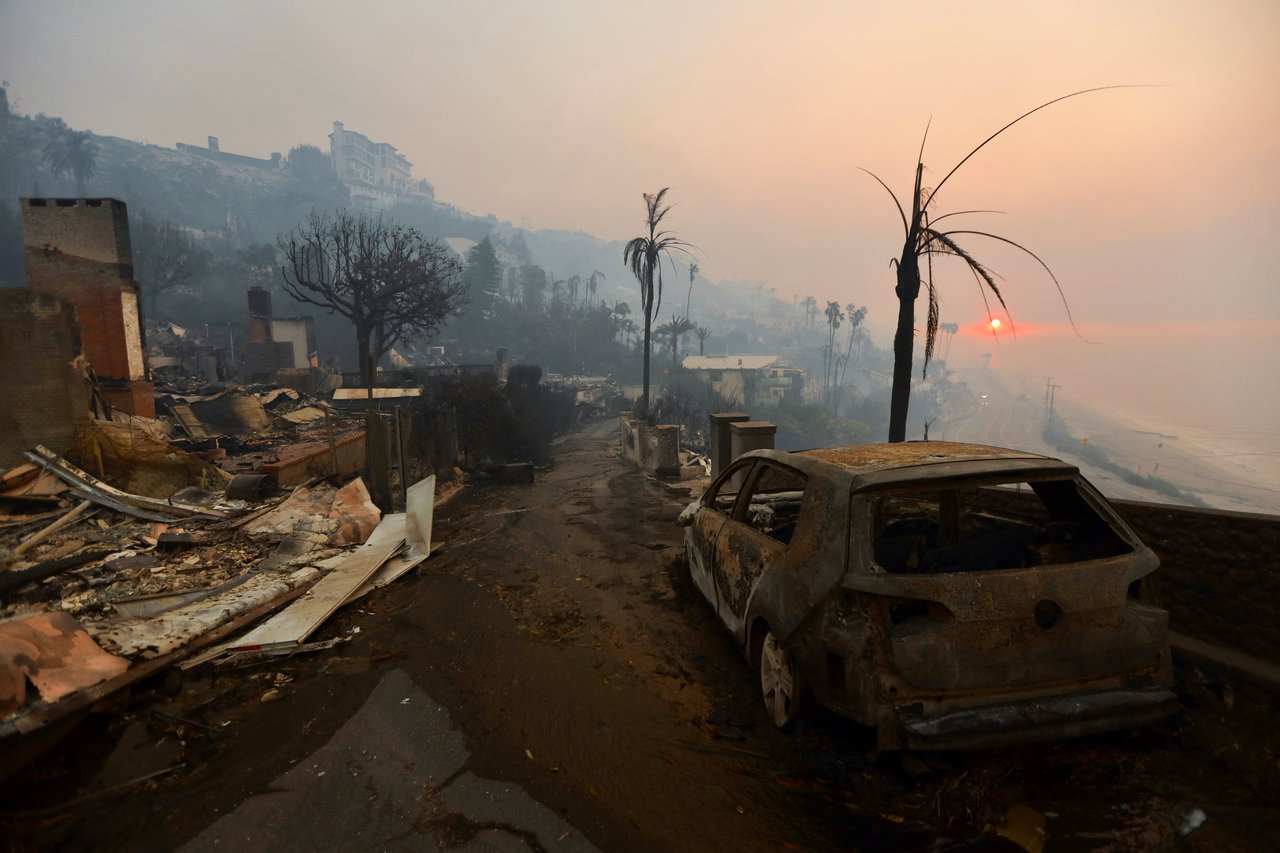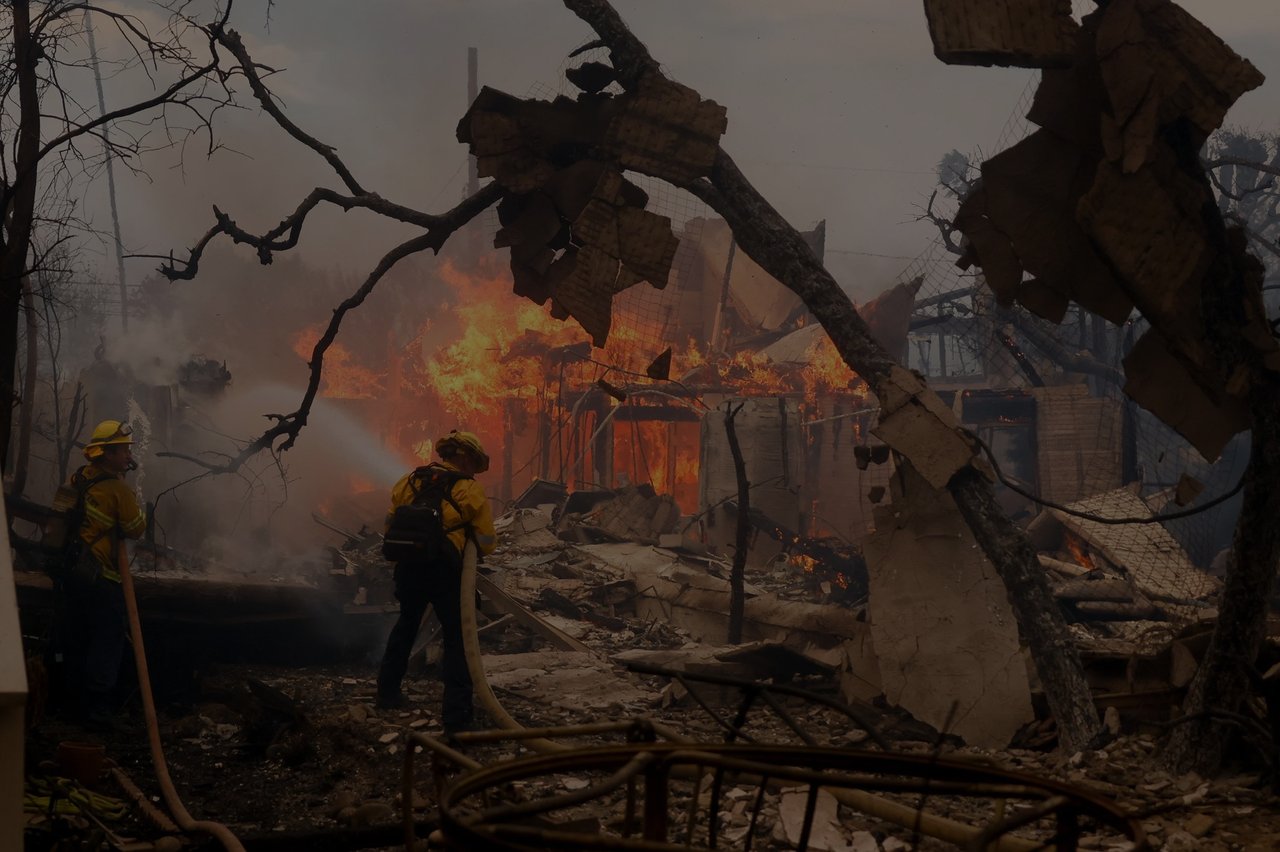
A burned lot on Pacific Coast Highway went on the market this summer for $5.69 million. The house that stood there until January 2025 sold for $8.6 million just two years earlier. The owners ran the numbers on their insurance payout against what it would actually cost to rebuild, and they listed the dirt instead.
The parcel sits at 20802 PCH in Las Flores Beach, with 53 feet of direct ocean frontage, a rarity in a stretch where 40-foot lots are the norm. Steve Lewis, president of Core Real Estate Group and the listing agent, put it plainly to Realtor.com: "Malibu is its own animal." He is not wrong, but the animal is behaving in a way that should catch the attention of anyone comparing Malibu against other coastal California markets right now.
The Number That Doesn't Match the Headline
Ordinarily, when a market's home prices soften, land follows. Buyers price raw dirt off what finished product is worth, and if finished product is worth less, dirt gets discounted too. Malibu is running the opposite pattern.
Realtor.com's June 2026 data shows the median existing-home price in Malibu fell 2.5 percent year over year to $5.69 million. In the same window, the price of unbuilt land in Malibu rose 15 percent, to $1.49 million. Realtor.com senior economist Hannah Jones summarized why: "Lot listings are seeing prices rise likely due to their affordability, accessibility, and development potential."
That is a real signal, not a rounding error, and it means something different depending on which side of the transaction you sit on. For a seller holding a fire-affected lot, it means the land under your feet may be worth more today than it was a year ago, even while the comparable finished home down the street sells for less. For a buyer, it means the entry price into Malibu land has moved up even as the headline "median home price" makes the market look softer than it is.
Where the Insurance Math Actually Breaks
The reason land is decoupling from home prices traces back to a gap that has nothing to do with desirability and everything to do with what a policy actually pays out. The Palisades Fire destroyed more than 600 homes in Malibu in January 2025. More than a year and a half later, the city's own real-time Rebuild Dashboard shows over 1,000 permits issued for repairs, debris removal, and temporary structures, but only 88 actual building permits approved for new construction, as reported in early August 2026. The rebuilding isn't stalled because owners don't want to come back. It's stalled because a growing share of them cannot make the numbers work.
The California FAIR Plan, the insurer of last resort for homeowners that private carriers have declined to cover, caps residential fire coverage at $3 million. A luxury Malibu rebuild, once you account for coastal engineering, seawalls, upgraded septic systems, and current construction codes, often runs $7 million to $10 million or more. That gap between what a policy pays and what a permit costs is the whole story. As of March 2026, the FAIR Plan carried 684,388 policies in force and $750 billion in total exposure, increases of 152 percent and 242 percent respectively since September 2022, a trajectory that shows how many California homeowners have already been pushed onto this backstop.
The insurance picture got less forgiving this year, not more. A one-year moratorium that barred insurers from non-renewing policies on fire-affected properties ran from January 7, 2025 through January 7, 2026, and it has now expired. Owners weighing whether to rebuild or sell are doing that math against a policy environment that is actively shifting under them, not one they can count on holding still.
What It Actually Costs to Get Permission to Rebuild
For anyone evaluating a Malibu lot as a rebuild opportunity, the permitting pathway matters as much as the price per square foot. The city's rebuild guidance lays out three tiers, and the difference between them is the difference between a project that pencils and one that doesn't.
| Pathway | Cost | Typical Timeline |
|---|---|---|
| Planning Verification | $200 | About one week |
| Administrative or Site Plan Review | $1,590 to $3,499 | Three to six months |
| Coastal Development Permit | $11,579 or more | 12 to 24 months |
A like-for-like rebuild that clears Planning Verification can be underway in weeks. A project that needs a full Coastal Development Permit, because it exceeds height limits, relocates outside the prior footprint, or falls outside the state's disaster exemptions, can take two years just to get approved before construction starts.
There's a detail in the rebuild rules that most people evaluating a burned lot miss entirely. Replacement structures in Malibu are governed by a bulk rule, not just a square footage limit. Under Zoning Interpretation 15, adopted in October 2025, an owner can rebuild up to 110 percent of the prior structure's volume, and that extra 10 percent can go toward height or square footage, but not both. The replacement also generally has to sit within 50 percent of the previous footprint, or the project needs a De Minimis Waiver or a full Coastal Development Permit instead.
That matters because a lot with documented pre-fire square footage above what current zoning would allow from scratch carries a rebuild right that is worth real money, separate from the dirt itself. Two adjacent parcels of identical size can have very different values if one has a paper trail proving a larger home once stood there and the other doesn't.
Who Is Actually Buying
The buyer pool for this land isn't uniform, and understanding who's in it explains a lot about where prices are heading. In Malibu's 90265 ZIP code, investors purchased 19 of the 43 lots that sold in the period reviewed, a 44.2 percent share, according to Redfin data reported in January 2026. Before the fires, investor purchases of vacant residential land in these ZIP codes were close to nonexistent.
That shift tells you something about who is willing to absorb rebuild risk right now. Owner-occupants who lost a home are often choosing to take the insurance payout, sell the land, and buy something finished elsewhere rather than spend years and additional capital chasing a permit. Professional builders and investors, who can spread that risk across multiple projects and who understand the entitlement math well enough to value it correctly, are stepping into that gap.
There's precedent for how long this kind of recovery actually takes. After the November 2018 Woolsey Fire, only 55 Malibu homes had been rebuilt three years later, and Malibu's median home price was still running roughly 20 percent below the prior year's level seven years out. That history is worth keeping in mind for anyone assuming this cycle resolves faster than the last one did.
What This Means If You're Buying or Selling Right Now
If you're selling a fire-affected lot, the entitlement history attached to it is an asset, not paperwork. Documentation proving what previously stood there, whether through old permits, tax assessor records, or aerial photographs, supports both the 110 percent bulk allowance and the streamlined Ordinance 524 rebuild pathway. According to the city's own guidance, in-kind rebuild rights go with the land, so a buyer who purchases your lot can generally still use the expedited process and Coastal Development Permit exemptions, provided rebuild application deadlines are met. A fee waiver tied to your original ownership, however, does not transfer to a new buyer.
Speaking of deadlines, the city's fee waiver program requires applications by June 30, 2028, and all building permits must be obtained by December 30, 2030. That gives owners and future buyers a longer runway than the current pace of rebuilding might suggest, but it is not indefinite.
If you're buying, the smarter question isn't "what does this lot cost per acre." It's "what rebuild rights come with it, and what does the fastest realistic permitting pathway look like for this specific parcel." A lot with clean documentation and a modest Administrative Review path in front of it is a fundamentally different asset than one that will require a full Coastal Development Permit and two years before you can break ground, even if the list prices look similar today.
A Few Questions Worth Asking Before You Make an Offer
Does a fire-rebuild lot come with guaranteed insurance for the new home? No. The FAIR Plan's $3 million cap and the recent expiration of the non-renewal moratorium mean coverage terms for any future structure need to be underwritten fresh, not assumed from the prior policy.
Can I build a bigger house than what burned down? Only within limits. The 110 percent bulk rule allows modest growth in height or square footage, not both, and moving the structure significantly from its prior footprint triggers a more involved permit process.
Is the pace of rebuilding likely to pick up soon? The city's own dashboard, showing 88 approved construction permits against more than a thousand issued for repairs and debris work, suggests the bottleneck is financial as much as procedural, and that kind of gap tends to close slowly.
Malibu's land market right now is telling a story that the median home price alone doesn't capture. Whether you're sitting on a lot you're deciding whether to rebuild or sell, or you're looking at raw land as an entry point into the market, the entitlement history and insurance math behind a specific parcel matter more than the address alone. The Di Prizito Group works with owners and buyers across Malibu's coastal corridor on exactly this kind of decision, from valuing a fire-affected lot correctly to structuring an off-market sale that accounts for what a property is actually worth once its rebuild rights are priced in. If you're weighing a move in this market, we're glad to walk through the specifics with you.